Code of Ethics for Professional Teachers
A Commitment to Integrity, Service, and Excellence
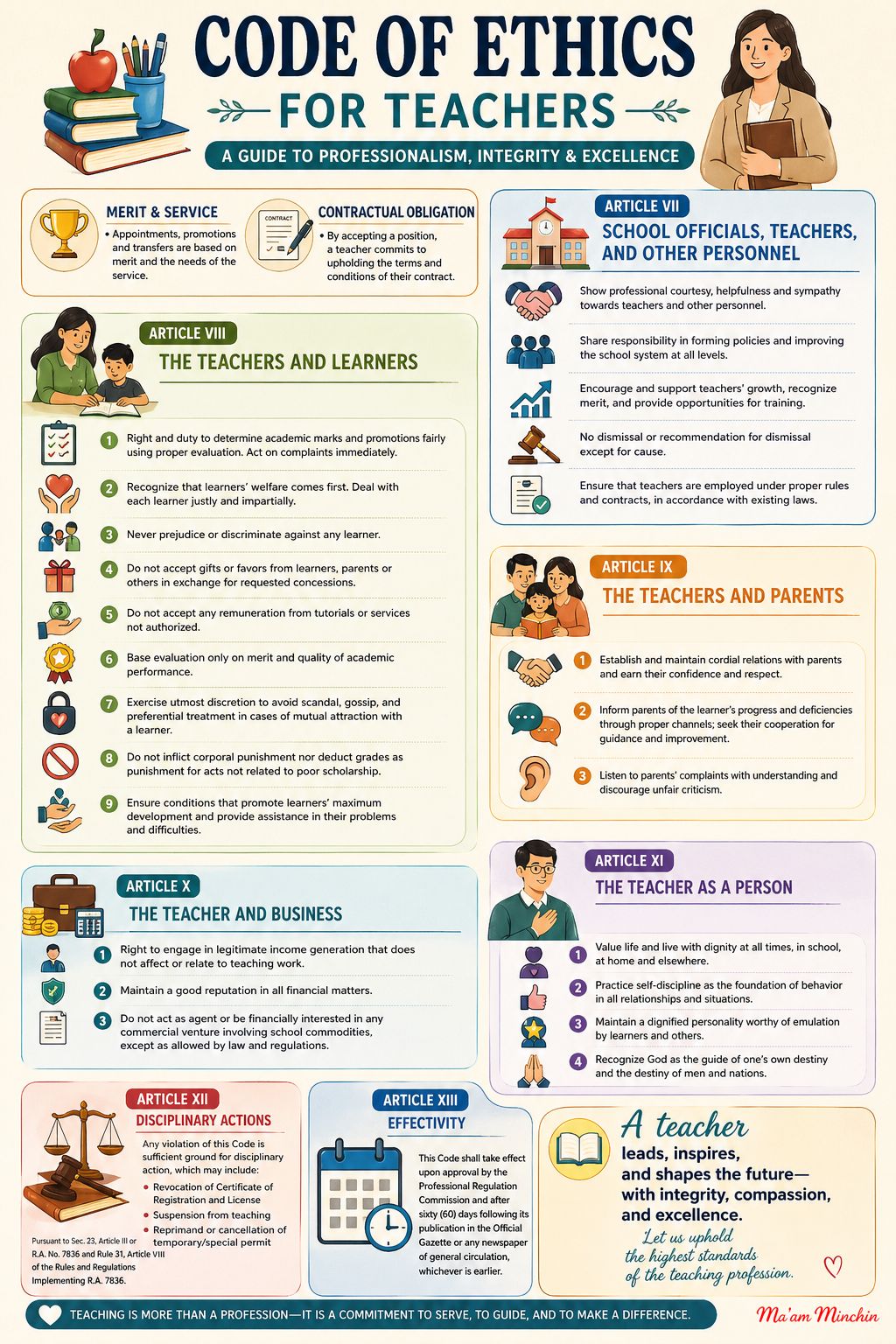
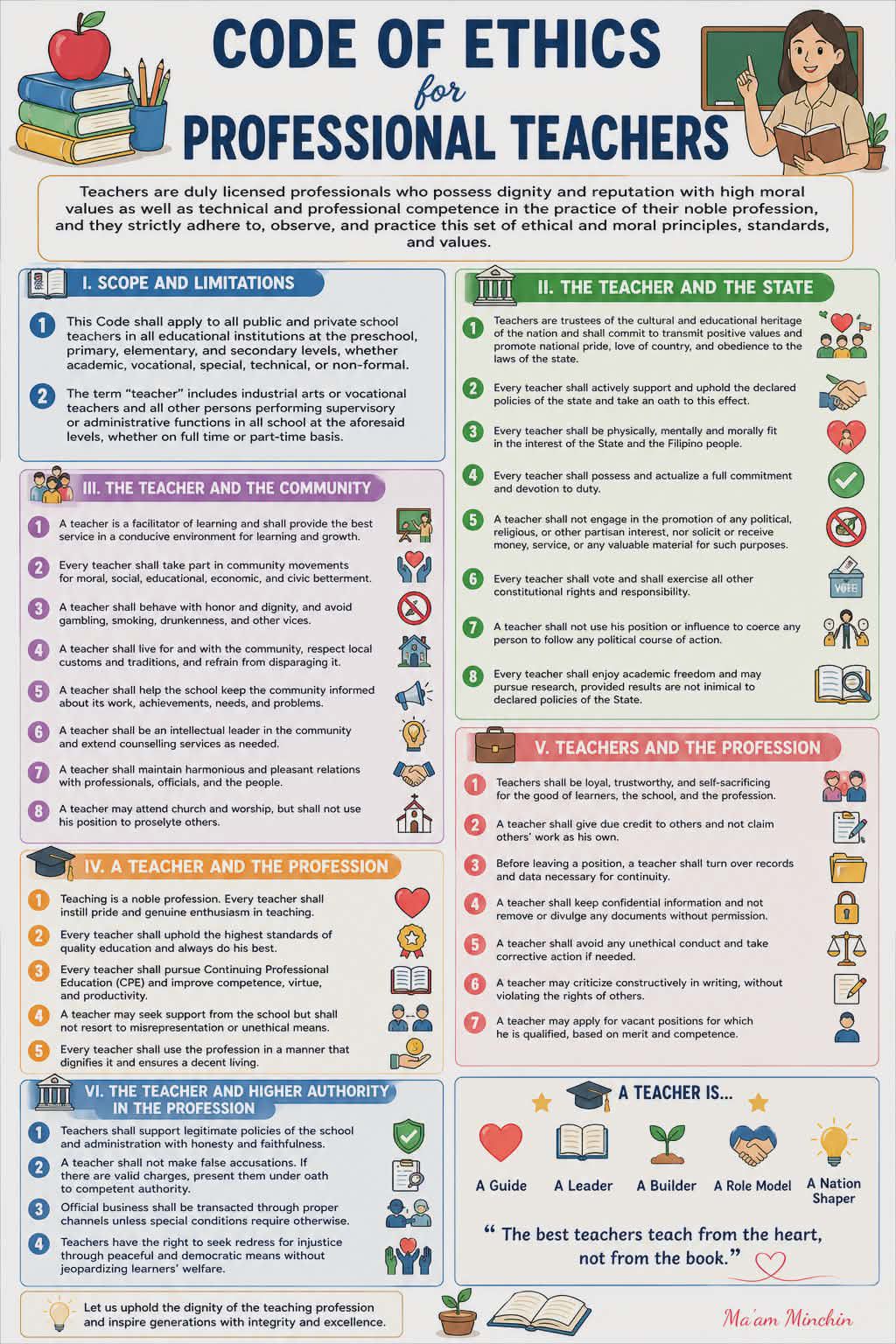
Teaching is more than a profession—it is a public trust. Teachers play a vital role in shaping minds, building character, and strengthening the nation. Guided by the Code of Ethics for Professional Teachers, educators are expected to uphold the highest standards of morality, professionalism, and dedication in all aspects of their work.
Teachers and the Learners
At the heart of teaching is the learner. Teachers are morally and professionally bound to place the welfare of learners above all else. They must evaluate academic performance fairly, avoid discrimination, and treat every learner with respect and compassion. Corporal punishment, favoritism, and exploitation have no place in ethical teaching. Instead, teachers must foster a safe, supportive, and nurturing learning environment that promotes maximum development.
Teachers and the Parents
Effective education is built on partnership. Teachers are expected to maintain cordial and respectful relationships with parents, keeping them informed of learners’ progress, strengths, and areas for improvement through proper channels. Listening with understanding and encouraging cooperation help build trust and support the holistic development of learners.
Teachers and the Community
Teachers are leaders beyond the classroom. As role models in the community, they must act with dignity, avoid vices, respect local customs, and actively participate in social, educational, and civic activities. Their conduct should always reflect honor and integrity, strengthening public confidence in the teaching profession.
Teachers and the Profession
The teaching profession demands continuous growth and accountability. Teachers must pursue excellence, engage in continuing professional development, respect colleagues, and give due credit to others’ work. Confidential information must be protected, and unethical conduct must be corrected when observed. Upholding the dignity of the profession is a shared responsibility.
Teachers and the State
Teachers are trustees of the nation’s educational and cultural heritage. They are expected to promote patriotism, obey laws, and support national educational policies. While teachers enjoy academic freedom, they must not engage in partisan political activities or use their position to influence others unfairly.
Teachers as Persons
Ethical teaching begins with personal integrity. Teachers must practice self‑discipline, live with dignity, and maintain a personality worthy of emulation. A teacher’s values, behavior, and decisions—both in and out of school—should reflect honesty, responsibility, and respect for life.
Disciplinary Actions and Accountability
Any violation of the Code of Ethics may result in disciplinary action, including suspension or revocation of teaching credentials. This ensures that the profession remains credible and that public trust is protected.
Conclusion
A teacher leads, inspires, and shapes the future. By faithfully observing the Code of Ethics for Professional Teachers, educators affirm their commitment to service, integrity, compassion, and excellence. Upholding these ethical standards ensures that teaching remains a noble profession and a powerful force for nation‑building.